
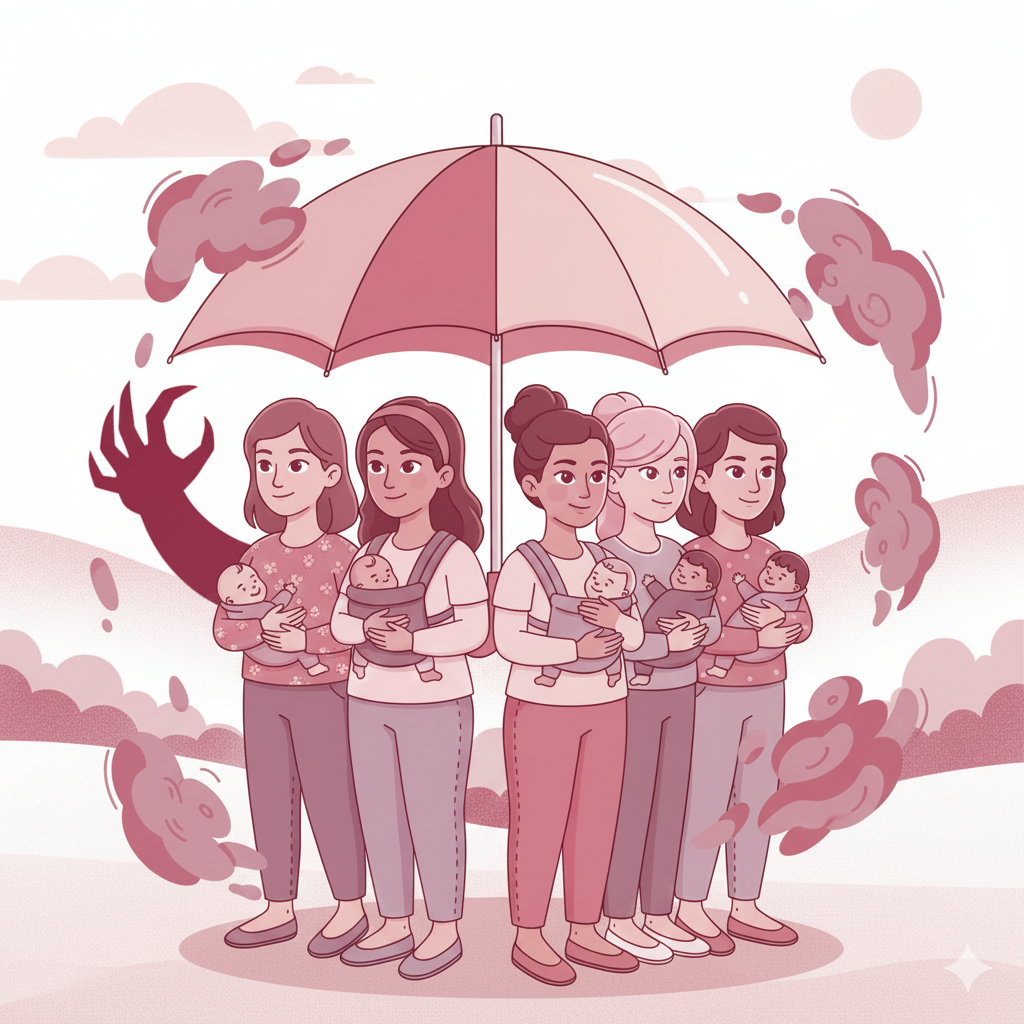
Why Are Women Targets During Postpartum?
Postpartum is one of the most transformative experiences in womanhood, yet it is rarely talked about honestly. We are warned about sex, bodies, and appearance, but no one really prepares us for what happens after the baby arrives. One thing that is almost never discussed is how other women behave around postpartum women.
Something strange happens when people find out you are pregnant. It reminds me of that scene in Finding Nemo with Bruce the shark. He is calm, friendly, repeating “fish are friends, not food” until Dory gets a nosebleed. The moment he smells blood, everything changes.
That is what postpartum felt like for me.
At first, it is congratulations and warm smiles. But once you are actually around people, once you are vulnerable, exhausted, and hormonal, you become a target.
I had two children in one year. After my first child, my daughter Chicago, my postpartum experience was joyful. I did not experience postpartum depression. I had wanted a child for a long time, and I felt mentally prepared for my life to shift. What I was not prepared for was how other women, especially women who already had children, would treat me.
They made me comfortable first. They looked out for me. And then, like a switch flipping, they attacked.
It took time for me to realize it was not just one person. It was a pattern.
There is a saying that a woman never forgets how she was treated during postpartum. I believe that now. As someone who usually is not shaken by much, I can still feel rage rise in my body when I think about certain moments. Not sadness, rage.
On my second day postpartum, I was not even with my family. I was in someone else’s home, cooking, when a woman came up behind me and said, “You need to be cooking for everybody.” It was not helpful. It was not kind. It was sharp, controlling, and cruel. Things escalated, and she became violent. I left that house. Thankfully, my mother came for me.
But even then, I found myself bracing. Dodging passive aggressive comments from my own mother, comments I had never heard from her before. Things like, “Your mommy did not give you milk,” or “Your mom is not taking care of you.” As a fresh postpartum mother, comments like that take you from zero to jail in seconds.
I did not feel depression. I felt anger.
And that anger made sense.
When a woman carries a child for nine months, it is a blessing, but it is also extreme. Your nutrients are depleted. Your hair falls out. Your body is recovering from trauma. Hormones spike during pregnancy and then drop suddenly after birth. Imagine the biggest rollercoaster you have ever been on. Now imagine that drop happening inside your nervous system.
Postpartum is not a gentle phase and women are their most vulnerable.
And yet people look at you, see a healthy baby and a smiling face, and assume the journey was easy. They do not see the internal crash. They do not feel the vulnerability. They do not respect the moment.
When I had my son a year later, I moved differently. I protected myself. I controlled my environment. Before my mother flew out, I gave her a list of things not to say and not to do. I limited who I was around. I stayed ahead of triggers. By the grace of God, I avoided postpartum depression again, but this time I was guarded.
Recently, I read a thread of women sharing their postpartum experiences, and the pattern was undeniable. Story after story of women being mistreated, not by strangers, but by other women.
So I ask, why is this not talked about?
We discuss how men change after a baby arrives, but we rarely acknowledge how something in women gets activated. Is it jealousy? Projection. Unhealed trauma. Is it women reenacting the harm done to them when they were postpartum. Or testing how much another woman can endure.
If I had to name it, I would call it postpartum abuse.
And I wish someone had warned me.
The humanitarian in me tries to hold compassion. I know many women had it harder than I did. Some had to return to work immediately. Some had no support. No rest. No financial cushion. But even so, where is the self control. Where is the kindness?
If this behavior is projection, it is devastating.
If there is anything I would warn women about pregnancy, it is this. Protect your energy fiercely. Even if you feel fine. Especially if you feel fine. Set boundaries. Make people fall in line. Anyone who wants access to you during postpartum should earn it with respect.
And if you have experienced this, if another woman made your postpartum period harder than it already was, I want to hear your story. How did you navigate it? How did you protect yourself?
Because this silence does not serve us anymore.
Postpartum is not just physical. Your body and mind are recovering from months of hormonal shifts, sleepless nights, and emotional intensity. Goli Ashwagandha Gummies are a gentle, convenient way to support your stress response and help your nervous system find balance during this intense season. They’re easy to take, tasty, and can be a small, daily reminder to care for yourself while caring for your baby. https://amzn.to/3NtGlty
Leave a Reply